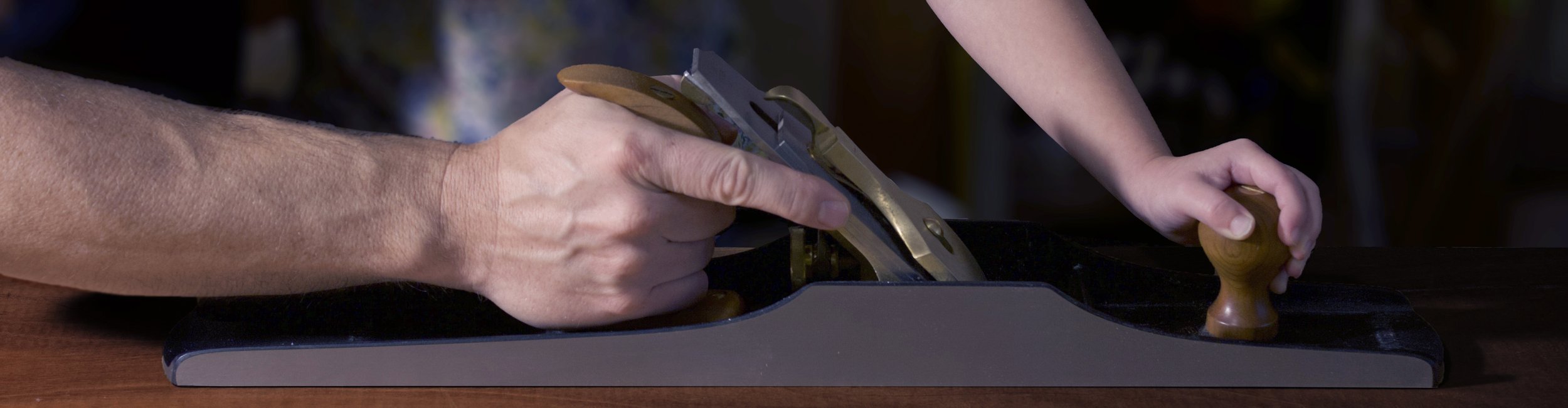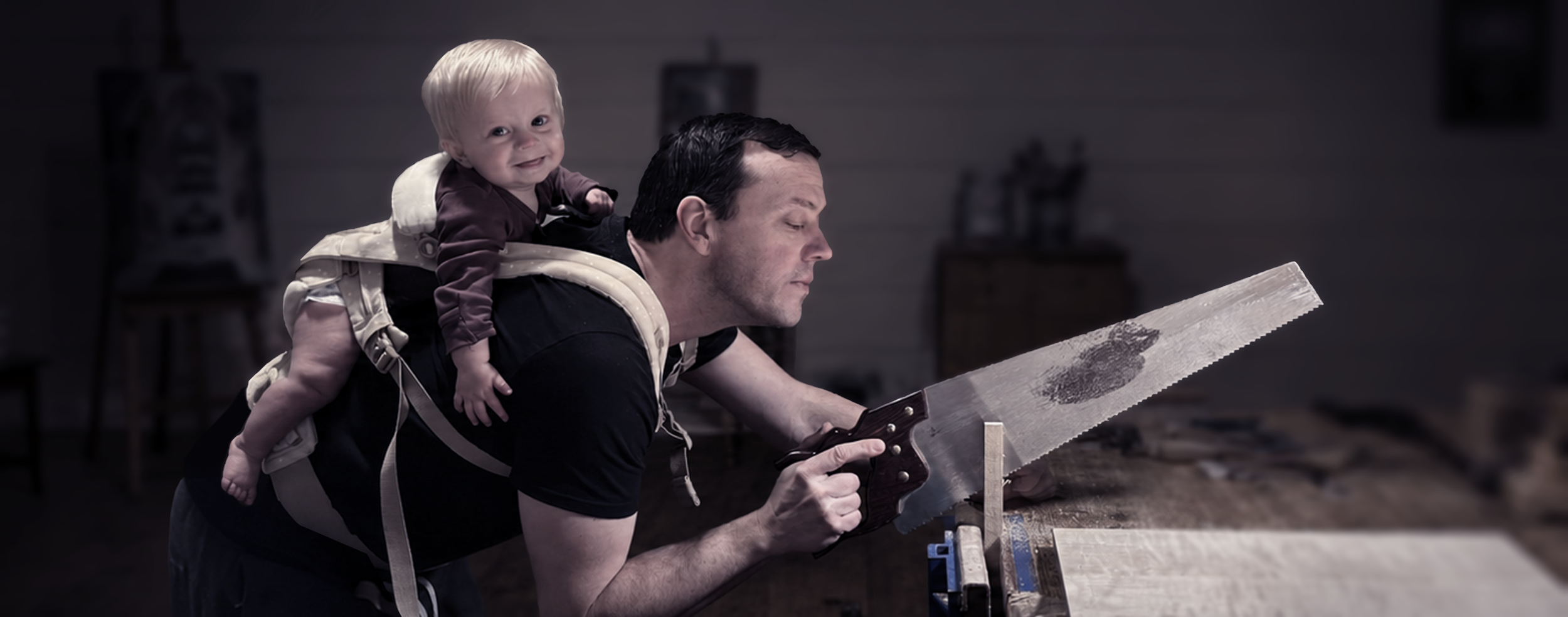
I came to furniture making through a lifelong habit of learning how things are built. My background is in fine art, and for more than twenty-five years I’ve worked in studios, classrooms, and exhibition spaces thinking about how objects shape the environments around them. Family life pushed those ideas in a more practical direction. After becoming a parent and trying to make a small living space work for our new daily routines, I started building furniture out of necessity. What began as a simple changing table gradually became tables, chairs, cabinets, beds, and an ongoing study of how spaces quietly determine the rhythms that unfold inside them.
Over time I came to understand furniture less as decoration and more as part of the structure of everyday life. The shape of a room changes how people gather, work, rest, create, and care for one another. Good furniture helps hold those patterns together. My work is grounded in traditional joinery techniques that have lasted for generations because they work. I build primarily with solid hardwoods, emphasizing durability, repairability, and long-term use over novelty or disposability. These pieces are meant to participate in life, to absorb wear honestly, and to grow more meaningful over time.
That philosophy eventually led me to start Hand-Joined Family Furniture, a nonprofit that provides custom, heirloom-quality furniture to families in need. Much of my experience designing furniture has come through working directly with families to solve practical problems within the realities of daily life, often in small or complicated spaces. One commission that has stayed with me is a custom sideboard built for a father who is visually impaired. It was the first time a client chose the wood species based on how it sounded and felt in his hands. That experience changed how I think about furniture, material, and use.
Some clients come with a specific piece in mind, while others need something designed around the particular rhythms of their home. Every project begins with a conversation about the space, what you need from it, and what kind of piece will serve it best. If you're interested in working together, the contact page is the right place to start.